

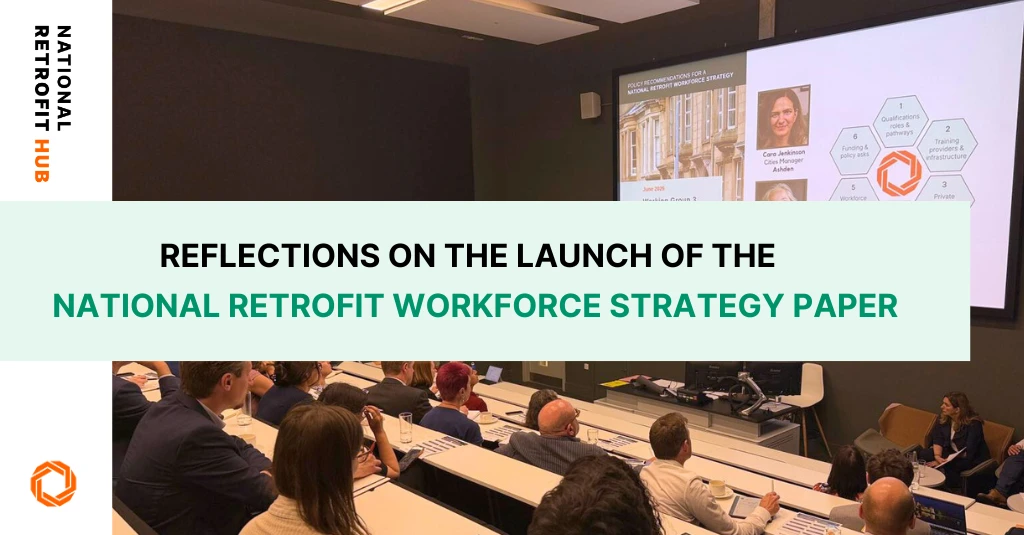
On Monday 9th June, the National Retrofit Hub and London South Bank University brought together policymakers, educators, industry leaders, local authorities, SMEs and community organisations to focus on one of the most urgent challenges in retrofit: building the skilled workforce needed to upgrade 19 million UK homes by 2050.
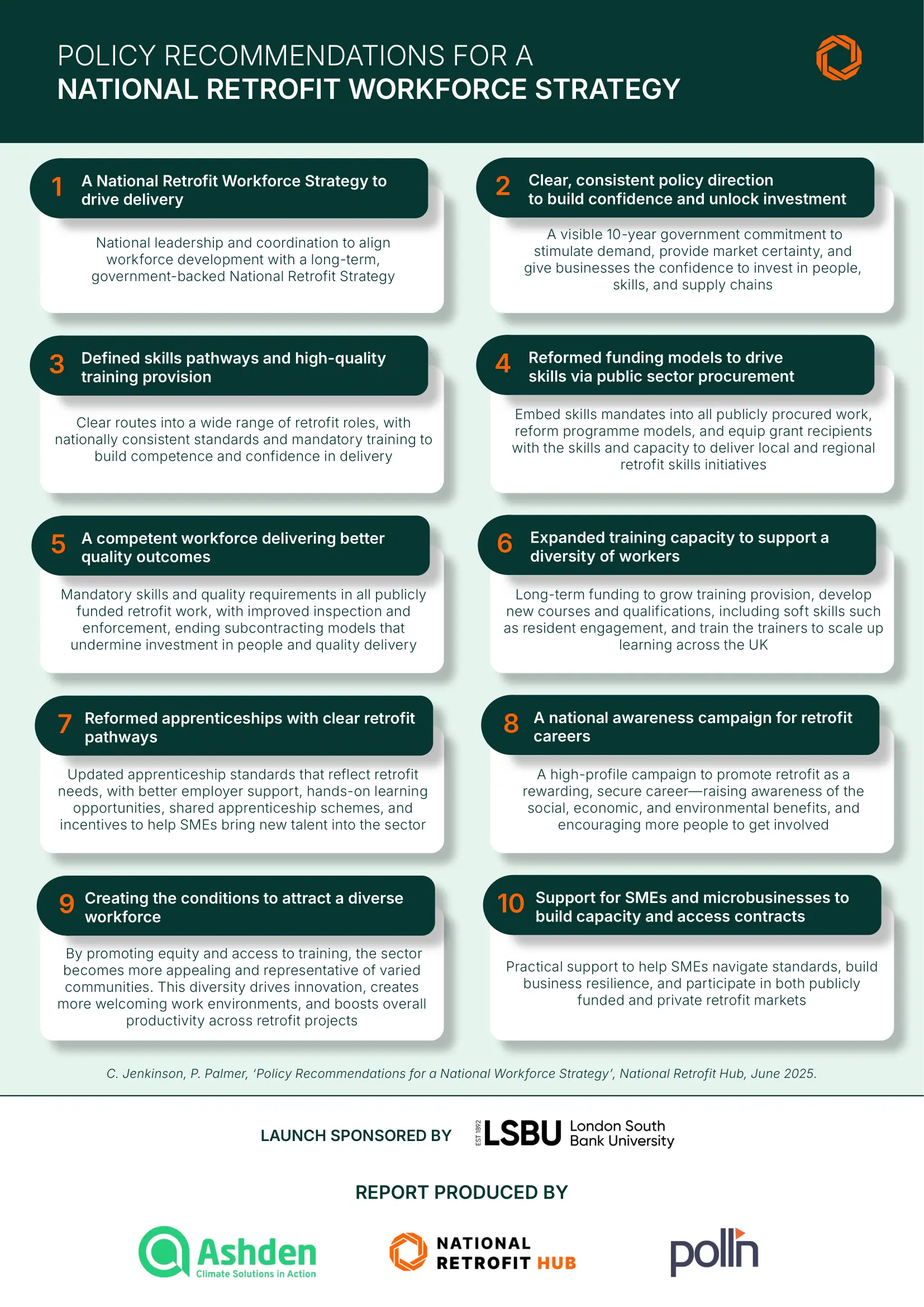
At the heart of the event was the launch of our new paper, Policy Recommendations for a National Retrofit Workforce Strategy, co-authored by Cara Jenkinson (Ashden) and Pippa Palmer (Polln and LSBU) on behalf of the National Retrofit Hub. The paper is the result of two years of insight-gathering from across the sector, and it puts forward a clear, practical case for national action.
We need leadership, coordination and investment to make it happen. We can’t keep circling the same barriers, we need to move quickly from agreement to action.
That sense of urgency was matched by the energy in the room. The discussion was open, honest and grounded in experience. There’s a clear appetite to work together and a growing frustration that progress continues to stall despite the solutions being known.
The paper calls for a 10-year national strategy to bring together government, industry, training providers and local authorities. It’s about aligning policy, funding and delivery so we can scale up retrofit at pace.
This is about careers, not just skills.
Retrofit shouldn’t be treated as a side hustle or a bolt-on. It needs to offer stable, long-term, meaningful careers. That means creating clear routes in, supporting career changers, offering progression, and opening up opportunities to people from all backgrounds.
We need to do more than meet demand. We need to inspire a generation of people to see retrofit as a career they can grow in; with the purpose, security and development they’re looking for.
KEY REFLECTIONS
What stood out most was the alignment in the room. Across roles, sectors and regions, there was agreement: the time for small-scale trials is over. We need to scale what works and shift from isolated action to shared delivery.
And we need national coordination to do that. This is not something any one part of the system can solve alone.
NEXT STEPS
We’re grateful to everyone who joined us and contributed to such a focused and energising conversation. If you would like to get involved, share reflections or stay updated, we would love to hear from you.
You can read the full strategy paper here.

