

Written by Sara Edmonds – NRH Co-Director
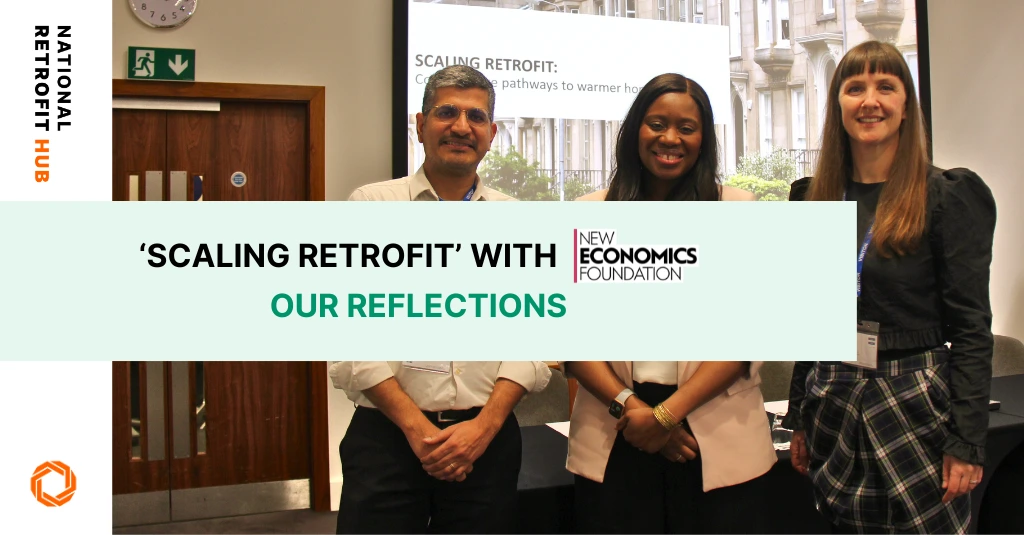
The recent event we co-hosted with the New Economics Foundation, “Scaling Retrofit: Collaborative Pathways to Warm Homes,” has left me reflecting deeply on the importance of relationships, collaboration, and the urgency to act without overcomplicating things.
One of the most striking aspects of the event was the real sense of collaboration that filled the room. It felt like there was a true sense of shared commitment to finding and delivering solutions. The engagement from Minister Fahnbulleh, our guest of honour, and her team was remarkable. They arrived early, made time to speak with attendees, stayed longer than planned, and genuinely connected with people in the room. It was refreshing to see such a hands-on, engaged approach from policymakers, especially when their involvement can often feel distant from the realities on the ground.
The minister demonstrated a clear and nuanced understanding of the complexities surrounding retrofitting and decarbonising our homes. Her reflections on the two reports launched at the event: “Creating Resilient Homes: A Vision for Partnership to Enable the Local Delivery of Retrofit at Scale” from the National Retrofit Hub (NRH) and “A Blueprint for Warmer Homes: How to Deliver a Retrofit Revolution” from the New Economics Foundation (NEF), were encouraging. She didn’t just mention the reports; she actively engaged with their content, asking thoughtful questions and making connections to the broader policy landscape.
That sense of commitment was echoed by the participants in the room. There was a tangible energy, a shared drive to ensure UK homes are safe, healthy, and aligned with our net-zero targets. We all recognise the scale of the challenge, but the mood was hopeful. The solutions exist, and success will depend on how we work together to implement them.
A few key themes really stood out from the discussions:
- Collaboration is essential: No single organisation, whether government, industry, or civil society, can address this challenge alone. It takes diverse expertise, pooled resources, adaptive governance, and partnerships that bridge gaps in knowledge and action.
- Hearts and minds: Public demand and confidence will be crucial to scaling up retrofit efforts. It’s not enough for policymakers and experts to see the value; we need to help people across the country understand the benefits of a warmer, healthier, more energy-efficient home.
- A significant step change: The leap from retrofitting thousands of homes to millions is massive. It demands bold thinking with new models, innovative partnerships, and fresh approaches to how we work together. The task feels overwhelming sometimes, but the consensus in the room was clear, we can do this if we are brave enough to move beyond traditional methods.
- Investment: Retrofitting at scale will take substantial investment, and there are tough decisions ahead. Policy needs to be smart, ensuring support reaches the most vulnerable while also unlocking opportunities for those who can pay or borrow to invest in their homes.
- Real-world practice: Theory alone won’t deliver the change we need, we must keep learning from those on the ground and adapting as we go.
- Area-based solutions: We need to enable local authorities and community groups to design place-based approaches that work for entire neighbourhoods. Local knowledge is invaluable in identifying challenges and opportunities unique to each community.
And perhaps the most encouraging part? The genuine offer of collaboration. The government’s openness to learning from external experts and exploring new ways of working together feels like a real opportunity. It’s a call to bring our collective expertise to the table and move from talk to action.
So what do we do with all of this? We keep going. The challenges are considerable, but with a shared vision and collective action, we can make a real difference. Let’s stay connected, stay curious, and keep moving forward together.

