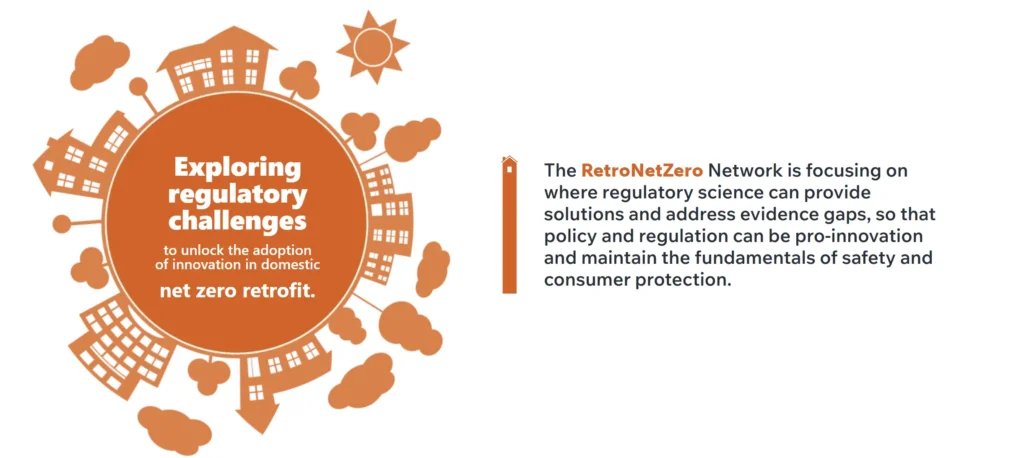
RetroNetZero supports innovation in domestic retrofit by addressing regulatory barriers that slow adoption. Many emerging technologies and approaches face uncertainty within existing regulatory frameworks, making it difficult to move from pilot to scale.
By strengthening the link between innovation and regulation, the project helps ensure new solutions can be adopted safely, confidently, and at scale across the retrofit market.
Phase 2 of this project started in January 2025 and will conclude in April 2026. The next phase will see project partners working together to identify a new set of challenges for focus.
The transition to net zero depends on new products, systems, and delivery models. However, regulatory processes are often designed around established technologies. This can create delays, uncertainty, and additional cost for innovators.
Without clearer approval pathways and evidence standards, promising solutions risk remaining at demonstration stage rather than contributing to mainstream retrofit delivery.
RetroNetZero responds to this challenge through the application of regulatory science.
The project identifies the types of evidence regulators require to assess new retrofit technologies and delivery approaches. It works with innovators, regulators, and sector specialists to clarify expectations, address evidence gaps, and improve understanding of performance requirements.
Practical tools are developed to help innovators navigate existing regulatory frameworks and understand what is needed for approval.
Our role focuses on ensuring innovation delivers clear public benefit. This includes examining health impact, building performance, and real-world conditions alongside carbon reduction.